Industrial Security Implementation at Manufacturing Facility

Stronger Security Sitewide

Stronger Security in Complex Industrial Control System Manufacturing Environment

We assist our client to implement greater security at their manufacturing facility via systems hardening of their ICS operating systems, finding and remediating vulnerabilities, implementing stronger protocols for everything from access control to change management.


We assisted to coordinate all inputs into their Security Information and Event Management (SIEM) system for proper monitoring and management.

PROJECT AIMS

Objectives

Risk Assessment

At the outset it is key to address all likely threats and risks to the factory and company, both external malicious and environmental threats that can result in issues such as ransomware or downtime, and internal threats such as disgrunteld insiders or unintended errors.


A practical and thorough assessment is key to make sure not risks go ignored, and the prioritization of risks is made clearly to help organize remediations as most needed.

Asset and Systems Inventory

A first step in the project - to create lists and diagram all hardware, software, data and services in the industrial environment. Including:


- Hardware Devices and Interfaces

- Operating Systems

- Onboard Software

- Data, of all forms

- Software as a Service

- Endpoint devices - Employee workstations and mobile devices

Vulnerability Remediation and Management

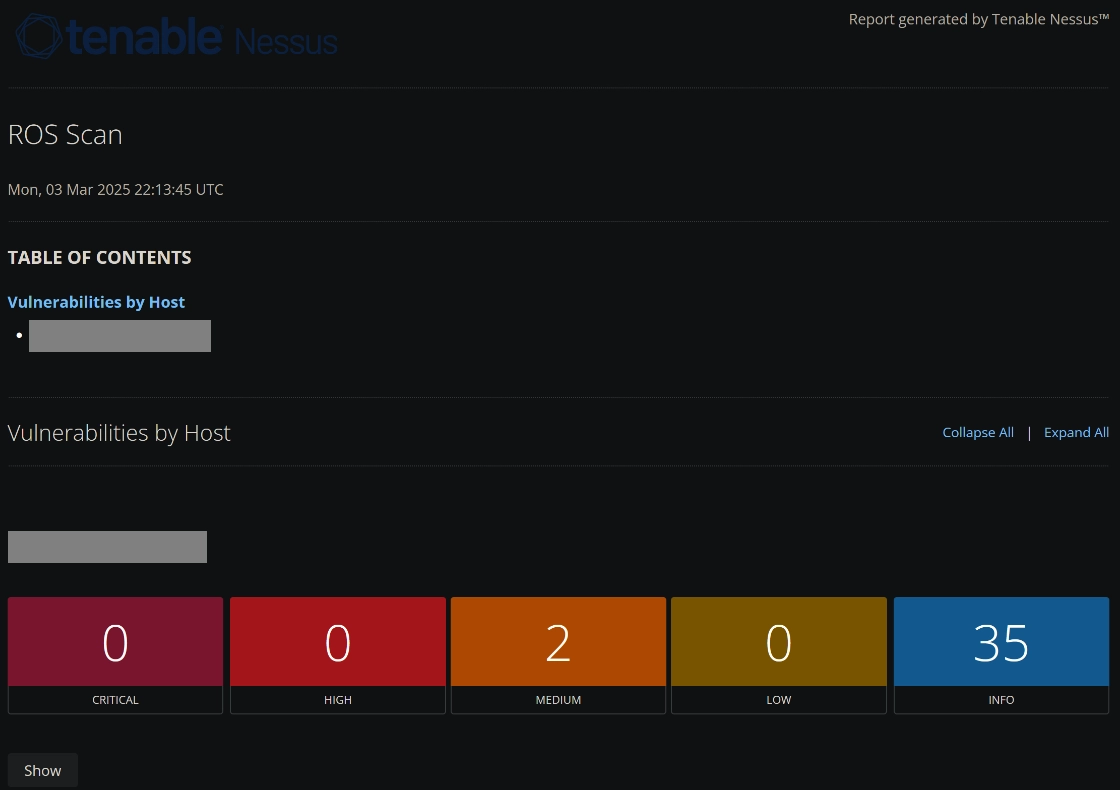
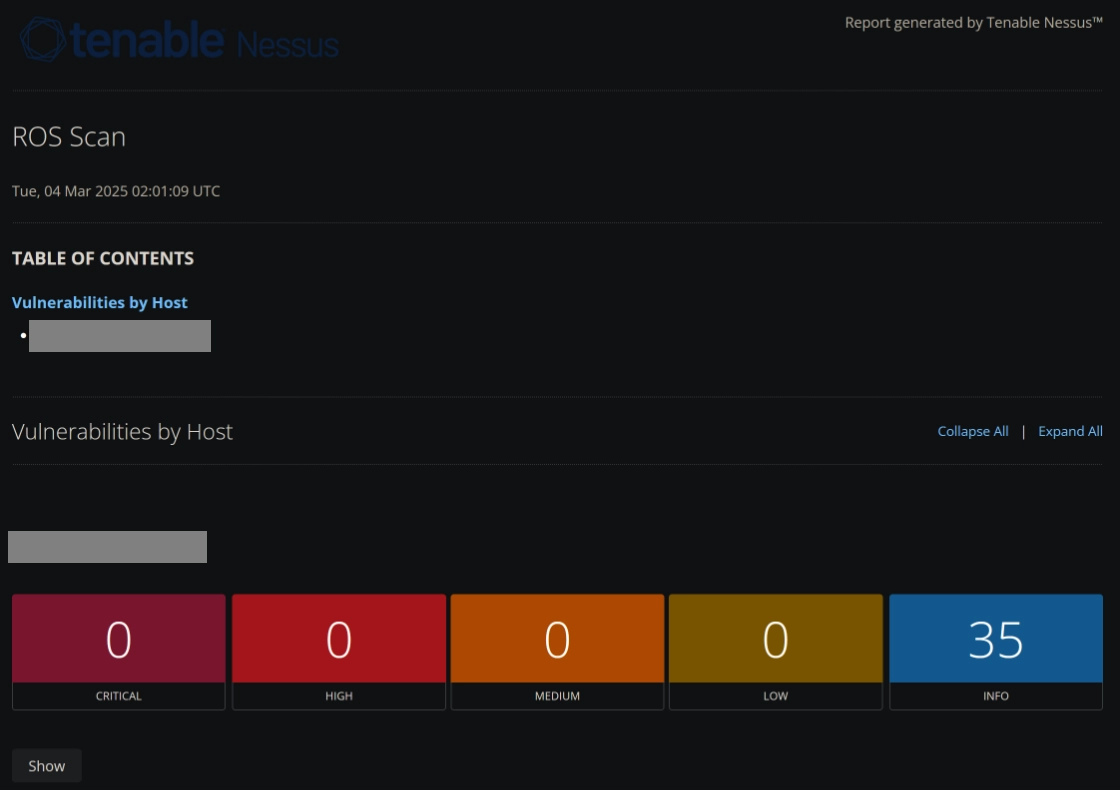
Scan and investigate the operating systems and software of everything, using a variety of premium tools fit for each operating system and asset, to find where the systems have unpatched security issues, bad configurations that leave them open to attack, and are generally vulnerable to error.


There is a 3-part process here: scan and find vulnerabilities, then patch and resolve them, then check and make sure they are actually fixed.

Systems Hardening

Beyond finding and resolving vulnerabilities, we will also work to "tighten up" security everywhere in the system, with:


- Stricter Access Controls - determining who gets access to what - we make this stronger, so people and systems only have access to what they absolute need access to, and no more to achieve least privilege.

- Zero Trust Architecture - implementing that any user has to validate credentials to access any data, asset or system.

- Stricter Configurations - in addition to vulnerability remediatoin, apply the best practice to manually increase all security strengths beyond defaults.

Incident Response Planning

We always work under the assumption that there will be a security breach at some time, and it is important to create the plan in advance how to respond to different kinds of incidents.


Also related are Business Continuity plans - how to keep working if the power or internet goes down, for example, and Disaster Recovery Plans - how to recover after a fire or flood, for example.

Penetration Testing

After we remediated vulnerabilities, improved access controls and hardened the systems our team attempted to breach the manufacturer's network and systems to help uncover more issues for resolution.

Precision Impacts

The Results

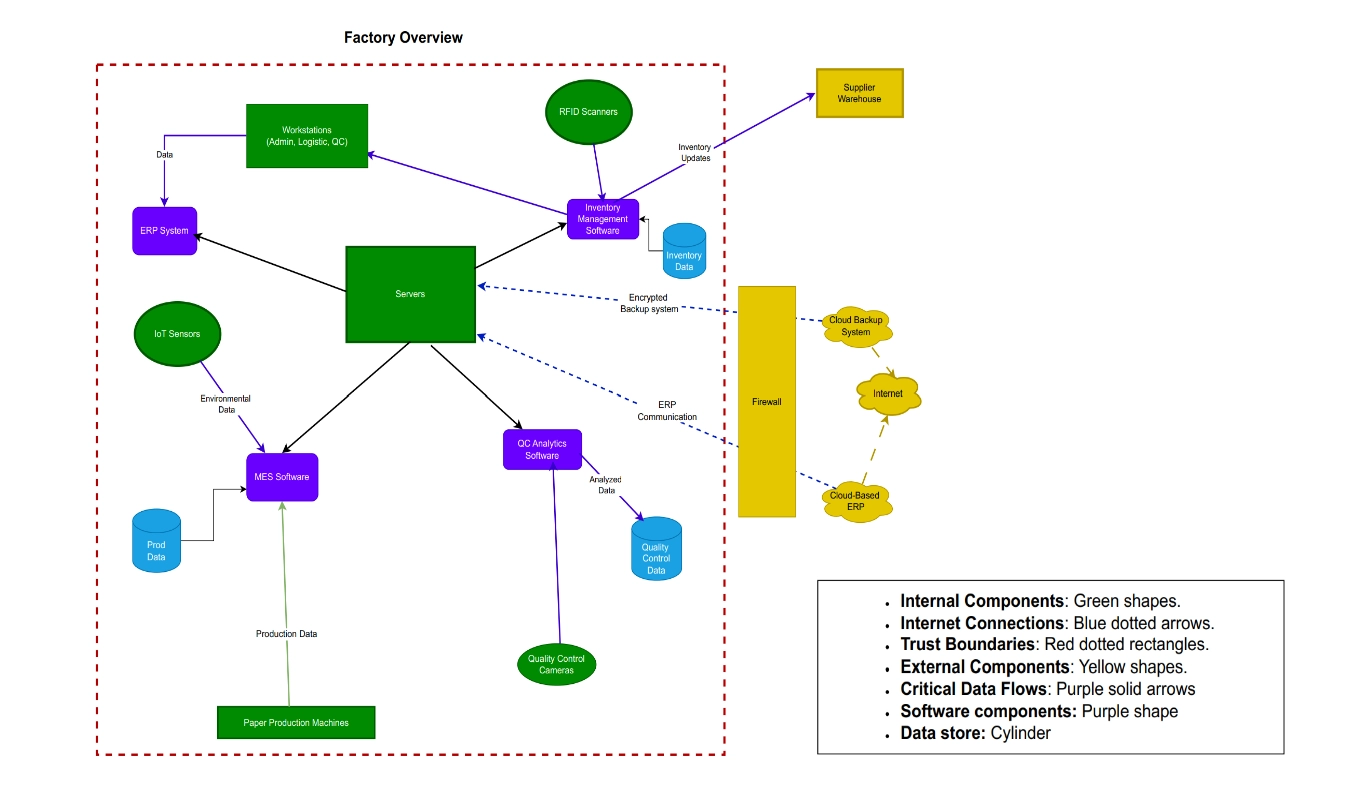
Factory Schematic Overview
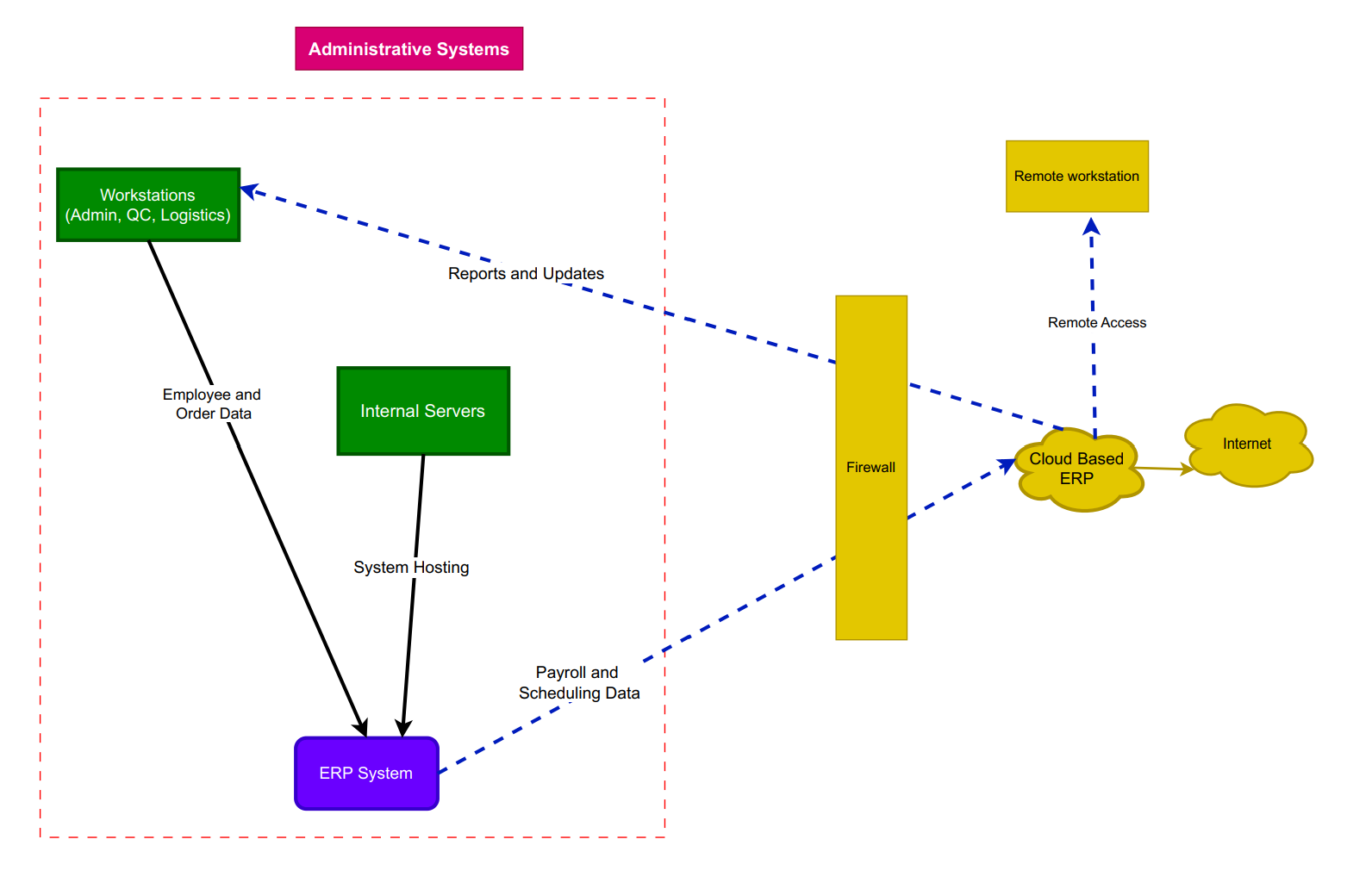
Administration Systems Schematic
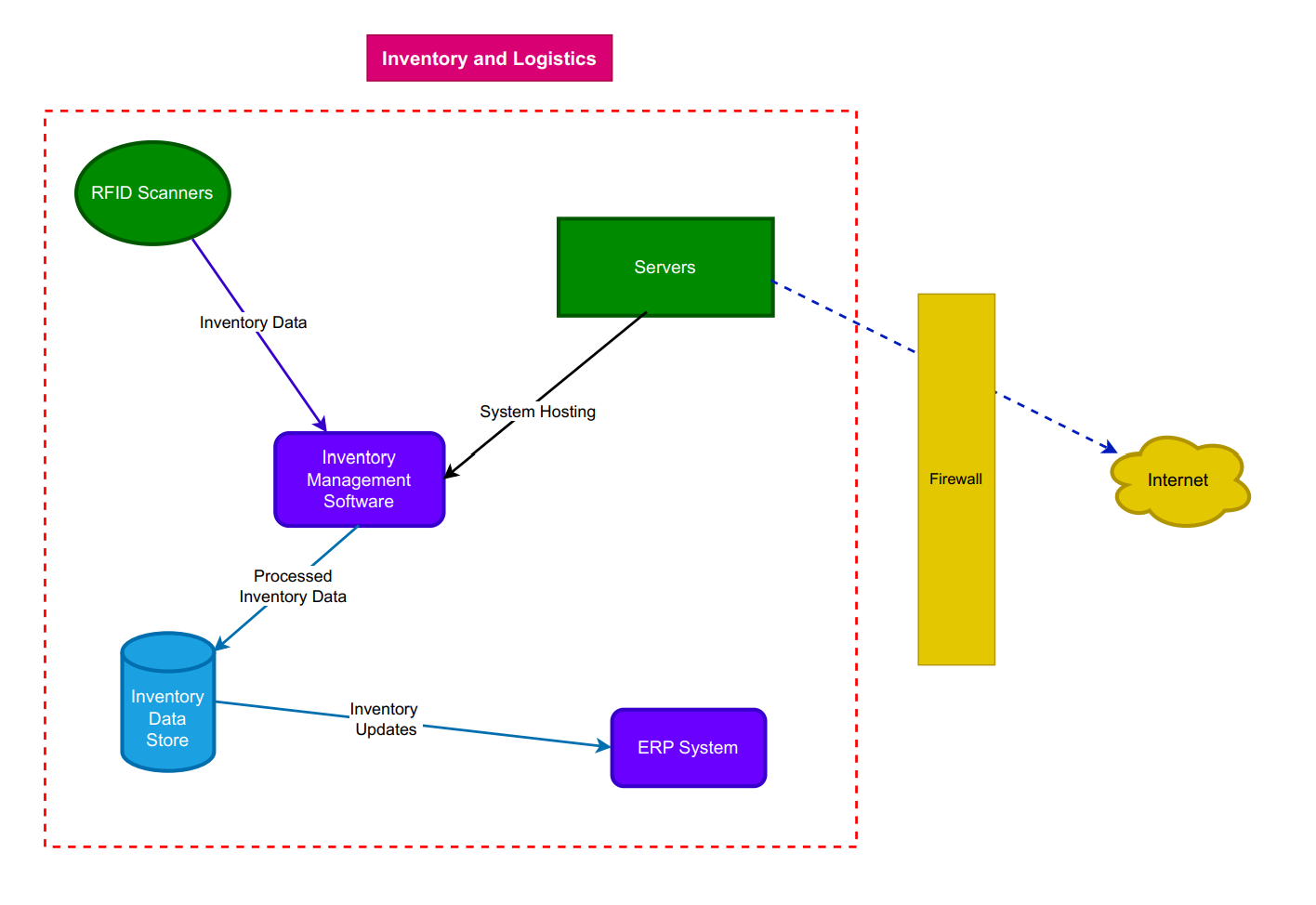
Inventory Logistics Schematic
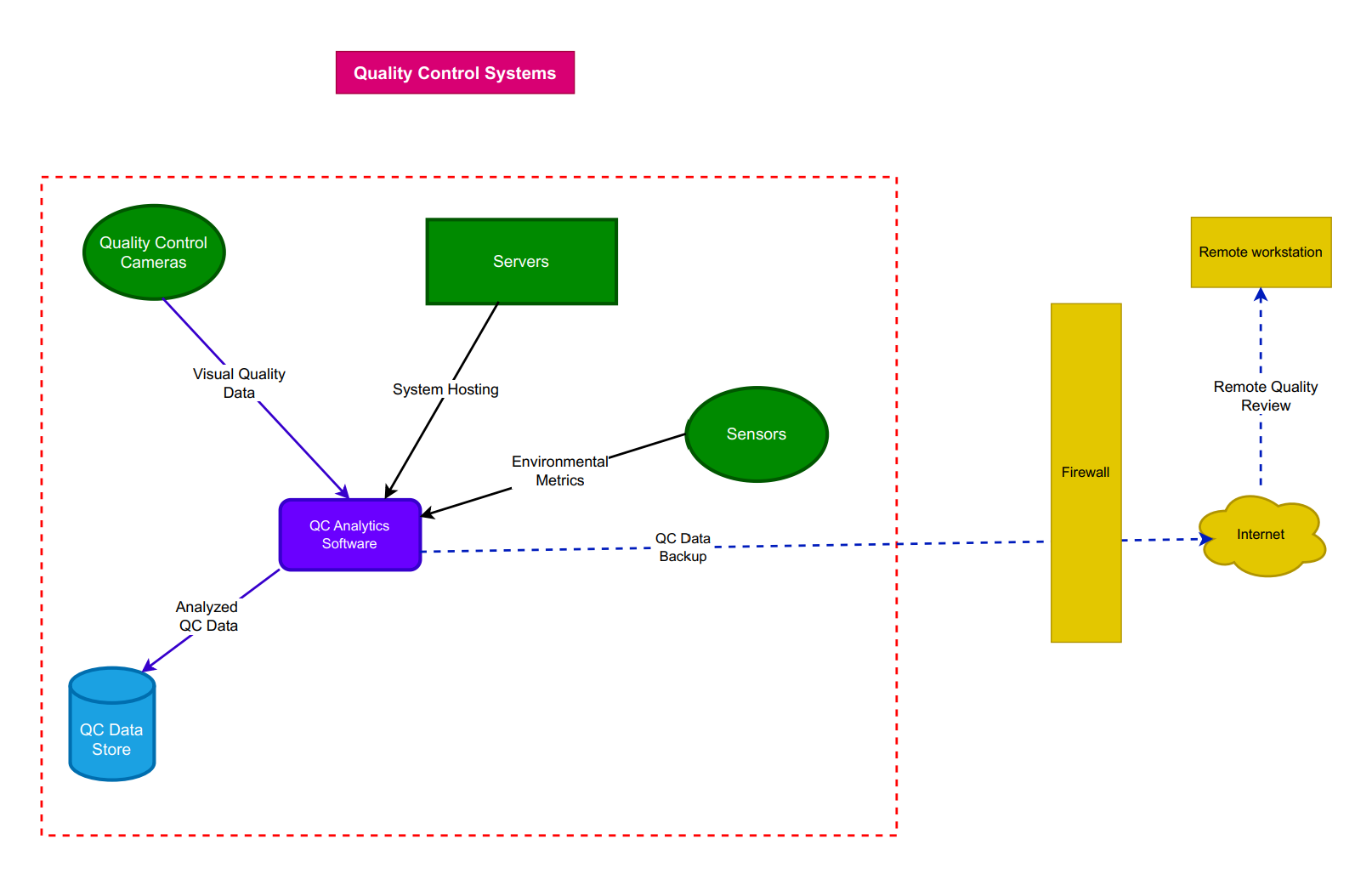
Quality Control Systems Schematic
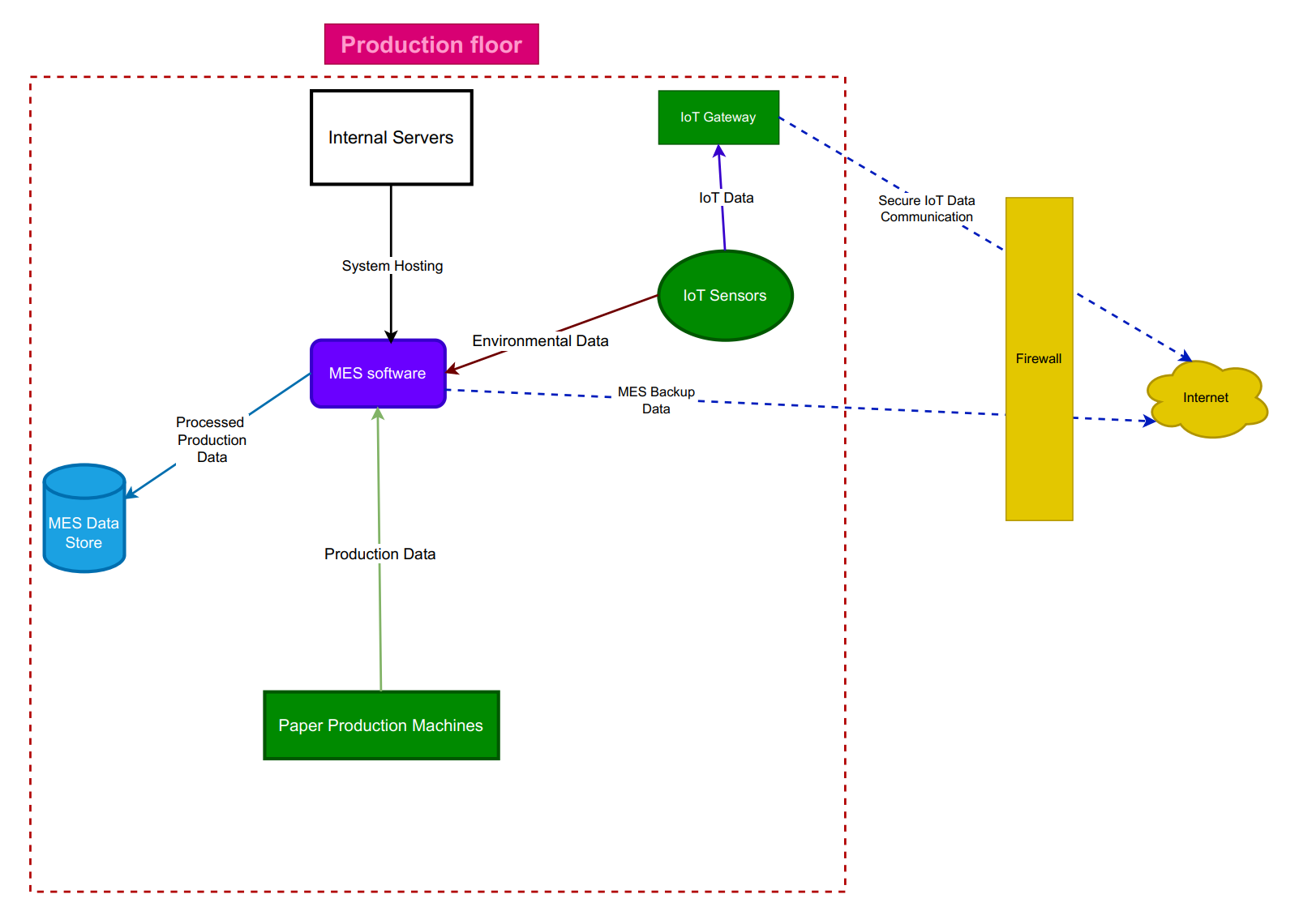
Production Floor Schematic
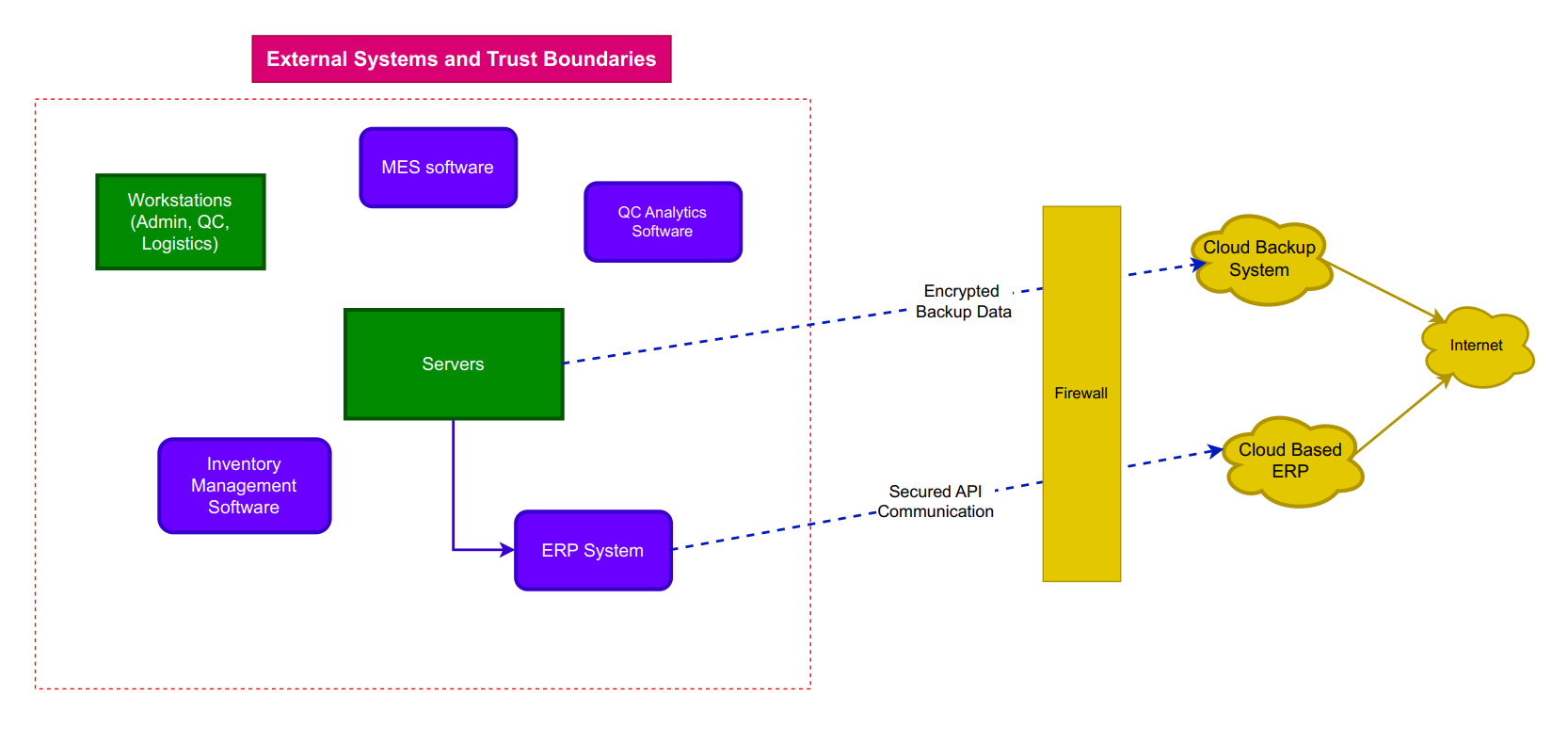
External Systems Trust Boundary
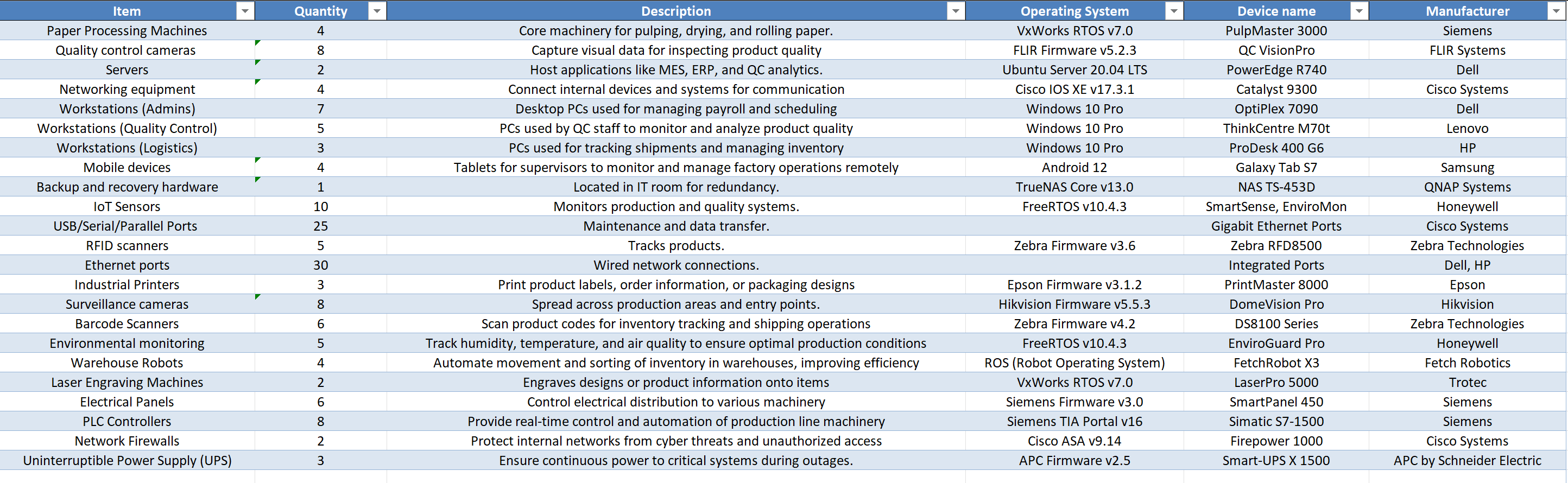
Protected Devices and Assets List
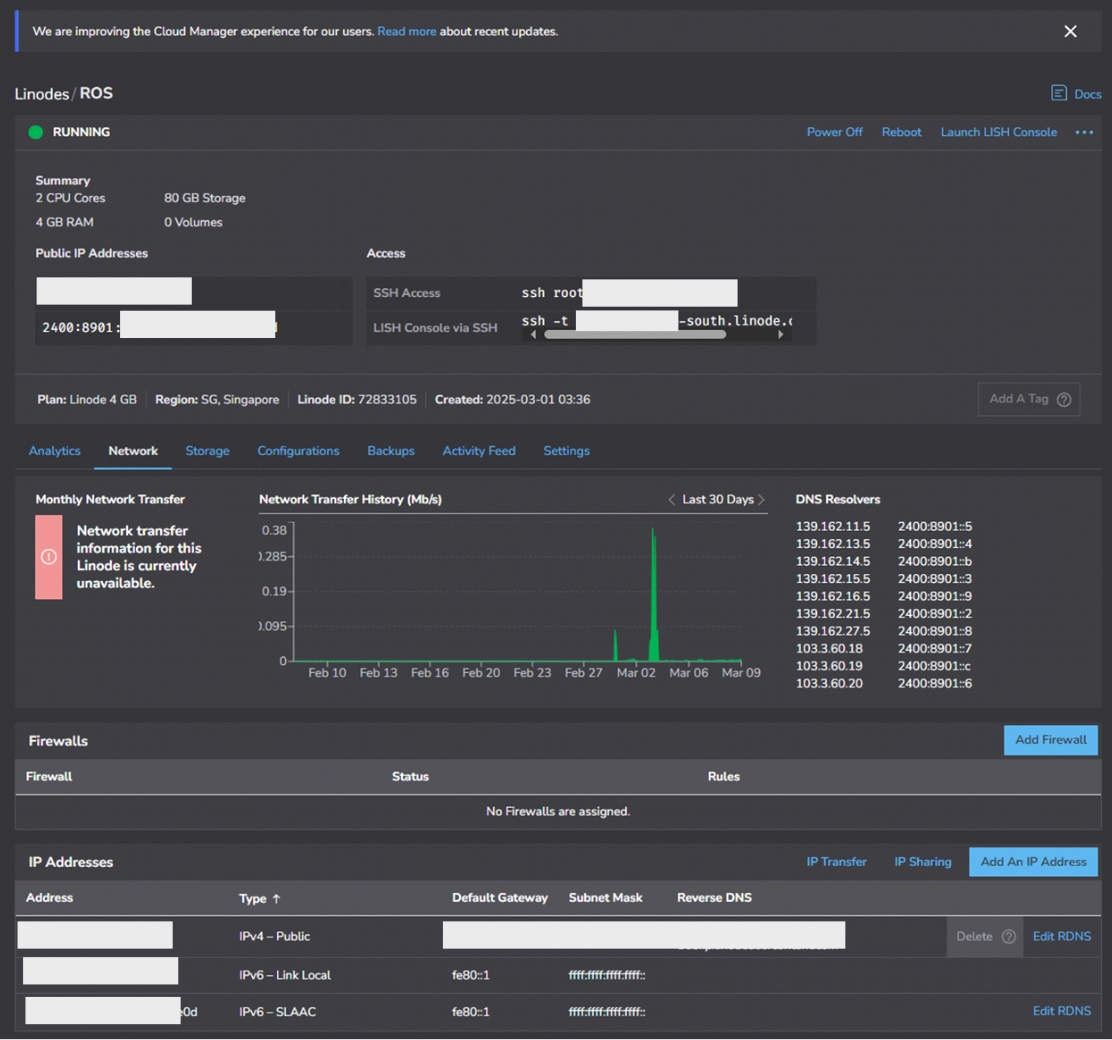
ROS System (FetchRobot X3)
ROS System dataflow
Mid Remediation ROS System 1
Mid Remediation ROS System 2
Security Throughout the Facility

Greater Control, Monitoring and Systems Hardening

Improving the security of the manufacturing facility involved a multi-layered approach to safeguard sensitive systems and data.


Key components include implementing network monitoring to detect unusual activity and intrusions in real-time. Vulnerability management practices were introduced to regularly identify and address security flaws in the infrastructure. Systems hardening was performed to strengthen the facility's critical systems, reducing potential attack surfaces.


Additionally, the project included employee training on security best practices and the establishment of incident response protocols to mitigate risks and enhance the overall resilience of the facility’s operations.